The example
You hold 100 combo contracts bought at 18¢, so $18.00 is at risk. Two legs have settled yes. The opposite side of the last leg costs 35¢. Fees are estimated at 7% × P × (1 − P).
| Hedge | Contracts | Net if it hits | Net if it misses |
|---|---|---|---|
| No hedge | 0 | +$82.00 | −$18.00 |
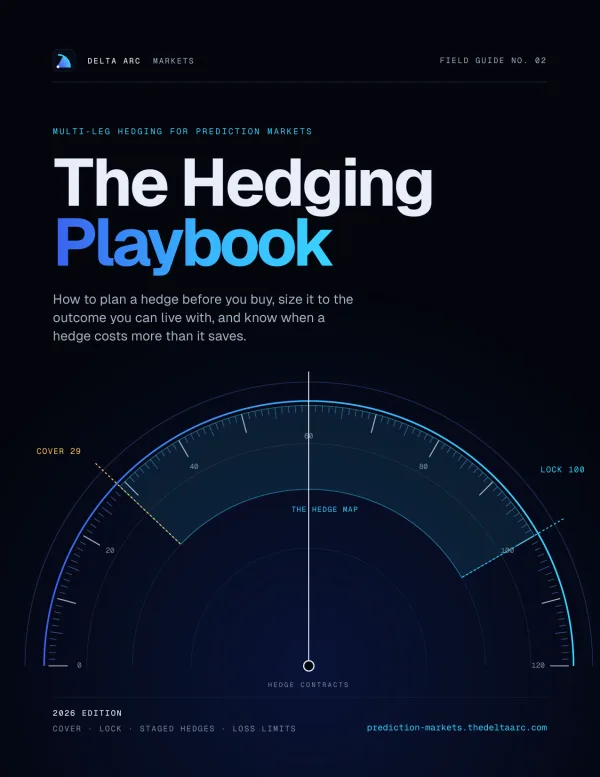
| Cover your cost | 29 | +$71.38 | +$0.38 |
| Lock the same result | 100 | +$45.40 | +$45.40 |
Size 1: cover your cost
Buy just enough opposite contracts that a miss pays back what you spent. Each opposite contract pays 100¢ minus its price if the leg misses, here 65¢.
cover size = contracts × price paid ÷ (100 − opposite price), rounded up
1,800 ÷ 65 = 27.7, so 28 contracts before fees. The fee on the hedge pushes it to 29. You keep 87% of the unhedged upside and remove the loss.
Size 2: lock the same result
Buy as many opposite contracts as you hold. One side always pays $1, so every pair returns $1 no matter what.
locked net = contracts × (100 − price paid − opposite price) − fees
100 × (100 − 18 − 35) = $47.00 before fees, about $45.40 after. A lock only works when the two prices add up to less than 100¢.
Anything in between
Every hedge size between 0 and 100 is a straight-line trade-off. Each extra hedge contract gives up about 35¢ of upside and adds about 65¢ to the downside. Pick the point that matches the worst outcome you can accept.
When not to hedge
- The prices add up to 100¢ or more. If you paid 55¢ and the other side costs 71¢, a full hedge locks in a loss.
- You still believe the leg is underpriced. A hedge gives that edge back to the market.
- The full loss is already acceptable. If you sized the position small, a hedge is optional.