Hedge: Buying the opposite side to limit what you can lose.
A hedge is a purchase of the other outcome. If you hold yes, a hedge is buying no (or the opposite side of the leg that is still open), so that one of your positions pays whichever way it settles.
Two sizes to know
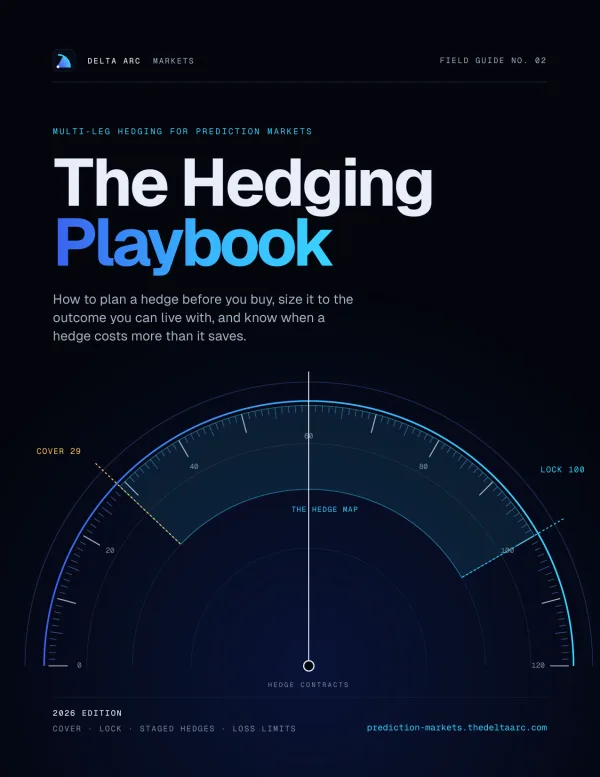
- Cover: just enough opposite contracts that a miss pays back what you spent.
- Lock: as many opposite contracts as you hold, so the result is the same either way. See lock.
Example
You hold 100 combo contracts bought at 18¢, and only the last leg is open. Its opposite side costs 35¢. Covering takes 29 contracts: you net $71.38 if the leg hits and $0.38 if it misses, after estimated fees. Locking takes 100 and nets $45.40 either way.
A hedge always gives up some upside. It is a way to choose the worst result you can accept, not a way to make money.